
Table of Contents
ToggleAnyone who’s tried to replicate that perfect movie theater popcorn at home knows the disappointment: it tastes like regular popcorn with melted butter. Not even close. The real thing has a distinct flavor, texture, and shine that home batches rarely match. The secret isn’t luck, it’s technique and the right ingredients. Theater popcorn uses specific equipment, a particular type of oil, and flavored salt that most home cooks don’t know about. With a few key adjustments to the standard stovetop or air-popper method, anyone can nail that buttery, golden, slightly addictive theater taste without leaving the house.
Key Takeaways
- Making movie theater popcorn at home requires three essential ingredients: refined coconut oil, flavacol seasoning salt, and clarified butter—not standard vegetable oil and melted butter.
- The stovetop method with properly heated coconut oil and a slightly cracked lid for steam venting delivers the closest match to commercial theater popcorn texture and taste.
- Flavacol is a game-changer; just ¼ teaspoon of this fine, buttery seasoning salt per batch sticks to kernels without clumping, unlike regular table salt.
- Layer clarified butter in thirds while tossing to prevent a soggy bottom and ensure even coverage throughout your popcorn batch.
- Fresh, properly stored kernels and careful heat control—medium-high temperature with a heavy-bottomed pot—prevent burnt spots and maximize crunch.
- Even air-popped popcorn can achieve theater flavor by drizzling a coconut oil and clarified butter mixture infused with flavacol after popping.
What Makes Movie Theater Popcorn Taste So Good?
The flavor comes down to three things: coconut oil, flavacol, and clarified butter. Most home popcorn uses vegetable or canola oil, which lacks the richness coconut oil delivers. Theaters pop kernels in coconut oil, often a blend with added beta-carotene for color, which gives the popcorn its signature taste and golden hue.
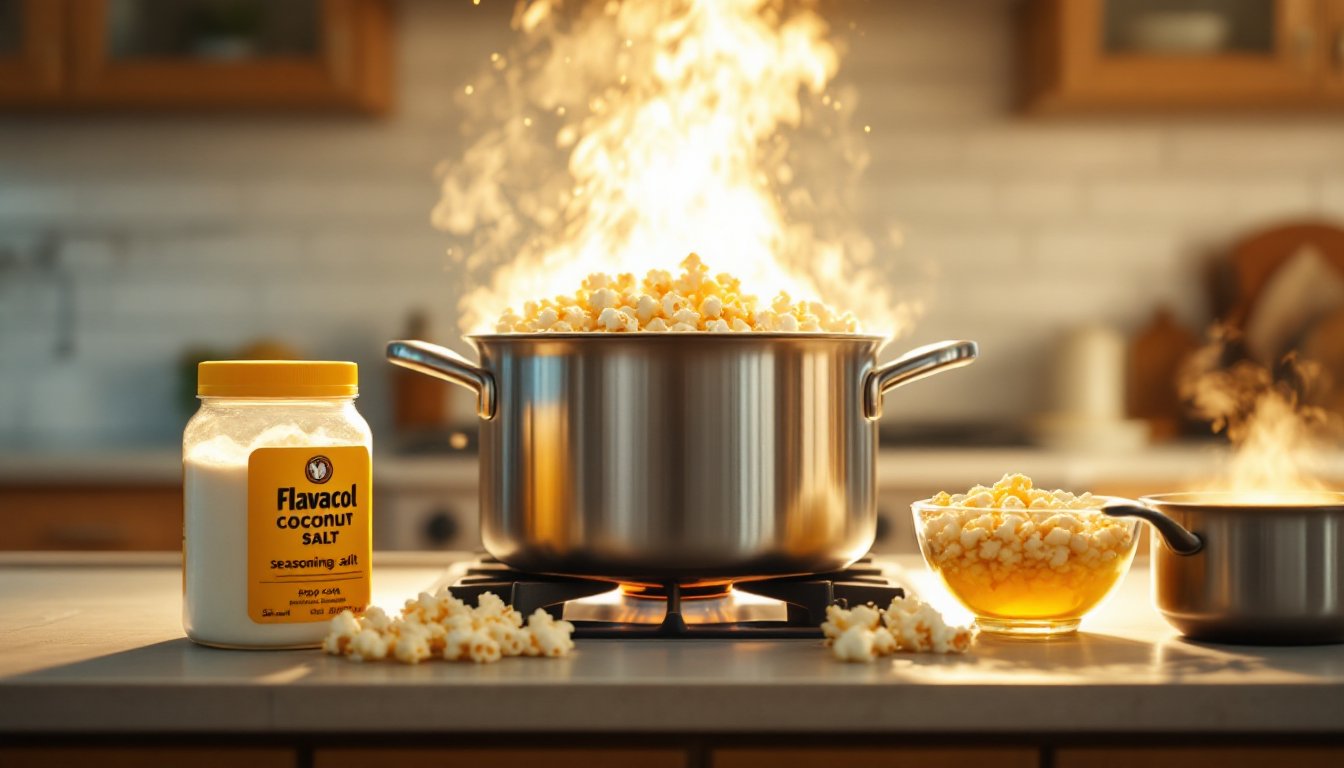
Flavacol is the real game-changer. It’s a fine, bright-yellow seasoning salt used in commercial poppers. Unlike table salt, flavacol contains butter flavoring and fine granules that stick to kernels without clumping. A little goes a long way, about ¼ teaspoon per batch is typical. It’s available online in small cartons and lasts months.
Finally, theaters don’t use regular melted butter. They drizzle clarified butter (or butter-flavored topping oil) over finished popcorn. Clarified butter is pure butterfat with milk solids removed, so it doesn’t make popcorn soggy. Some theaters use a shelf-stable butter-flavored oil instead, which has a more pronounced artificial taste but stays liquid at room temperature. Home cooks can clarify butter on the stovetop in about ten minutes or buy pre-made ghee, which is essentially the same thing.
Texture matters too. Theaters often use mushroom-shaped kernels for concession stands because they’re rounder and sturdier, but butterfly kernels (the irregular, “winged” kind) are more common for home use and still deliver authentic results if popped correctly.
Essential Ingredients for Authentic Theater-Style Popcorn
Here’s what to have on hand:
Materials:
- Popcorn kernels: ½ cup per batch (yellow butterfly kernels work well: mushroom kernels if available)
- Coconut oil: 3 tablespoons (refined, not virgin, virgin has a strong coconut taste)
- Flavacol seasoning salt: ¼–½ teaspoon per batch
- Clarified butter or ghee: 2–4 tablespoons, melted
- Optional: Additional fine salt if flavacol alone isn’t salty enough
Tools:
- Large pot with lid (at least 6-quart capacity) for stovetop method
- Air popper (optional, if using the air-popper method)
- Small saucepan for melting butter
- Large mixing bowl
- Measuring spoons
Coconut oil is sold in jars at most grocery stores. Look for refined coconut oil in the baking or health food aisle, it’s solid at room temperature and melts around 76°F. Flavacol is harder to find in stores but widely available online in 35-ounce cartons for under $10. One carton will last through dozens of batches.
Clarified butter can be made by melting unsalted butter over low heat, skimming off the foam, and pouring off the clear golden liquid, leaving the milky solids behind. Ghee, sold in jars near cooking oils, is the same product and saves time.
Step-by-Step Instructions for Perfect Homemade Movie Popcorn
Stovetop Method
This method most closely mimics commercial theater poppers and gives the best control over texture and flavor.
-
Heat the oil and test kernels. Add 3 tablespoons coconut oil to a large pot over medium-high heat. Drop in 3 test kernels and cover. When all three pop, the oil is ready.
-
Add kernels and flavacol. Remove the pot from heat. Add ½ cup kernels and ¼ teaspoon flavacol, then stir to coat. Let sit for 30 seconds off the burner to prevent scorching.
-
Return to heat and pop. Put the pot back on the burner, cover with the lid slightly ajar to vent steam, and shake gently every few seconds. Popcorn will start popping within 30–60 seconds. Keep shaking to prevent burning.
-
Listen for the finish. When popping slows to 2–3 seconds between pops, remove the pot from heat immediately. Don’t wait for every kernel, residual heat will pop a few more, and waiting too long burns the batch.
-
Transfer and butter. Pour popcorn into a large bowl. Drizzle 2–3 tablespoons melted clarified butter over the top while tossing gently. For even coverage, drizzle in stages: add a third of the butter, toss, repeat.
-
Season and serve. Taste and add a pinch more flavacol or fine salt if needed. Serve immediately for maximum crunch.
Safety note: Use oven mitts when handling the hot pot, and keep the lid angled away from your face when removing it, steam burns are common.
Air Popper Method with Theater Finishing
Air poppers produce fluffy, low-calorie popcorn, but they don’t use oil during popping. The workaround is to add theater flavor afterward. Traditional recipes using clarified butter emphasize finishing techniques that make up for the lack of coconut oil in the popping process.
-
Pop the kernels. Follow the air popper’s instructions, using ½ cup kernels. Pour into a large bowl.
-
Prepare coconut oil drizzle. Melt 2 tablespoons coconut oil and 2 tablespoons clarified butter together in a small saucepan over low heat. Stir in ¼ teaspoon flavacol until dissolved.
-
Coat the popcorn. Drizzle the oil-butter mixture over popcorn in stages, tossing between each addition. This prevents sogginess and ensures even coverage.
-
Adjust seasoning. Taste and add more flavacol or salt if desired.
This method won’t perfectly replicate the stovetop version, coconut oil works best when kernels pop in it, but it’s a solid compromise for those who prefer air-popped popcorn. Some home cooks find that air-popped kernels with butter deliver a lighter texture while still capturing the theater flavor profile.
Pro Tips for Theater-Quality Results Every Time
Use fresh kernels. Old popcorn loses moisture and pops poorly, leaving lots of unpopped kernels (known as “old maids”). Store kernels in an airtight container in a cool, dry place. They’ll stay fresh for up to a year.
Don’t skimp on oil. The ratio should be roughly 1 tablespoon oil per 2–3 tablespoons kernels. Too little oil means uneven popping and burnt spots. Too much makes greasy popcorn.
Control the heat. Medium-high works for most stovetops, but adjust if kernels burn before fully popping or if popping takes longer than 3–4 minutes. Cast iron and heavy-bottomed pots distribute heat more evenly than thin aluminum.
Vent the lid. Leaving the lid slightly cracked or using a splatter screen lets steam escape. Trapped steam makes popcorn chewy instead of crisp.
Layer the butter. Drizzling all the butter at once creates a soggy bottom layer. Add it in thirds while tossing, or use a spray bottle for ultra-even distribution.
Experiment with flavacol amounts. Start with ¼ teaspoon and work up. A little flavacol is potent, and oversalting ruins a batch. Some guides on perfecting theater popcorn recommend adjusting salt levels based on personal taste and kernel volume.
Try white kernels for variety. White popcorn kernels pop smaller and more tender than yellow, with a slightly milder flavor. They’re less common in theaters but preferred by some home cooks.
Make clarified butter in bulk. Clarify a pound of butter at once and store it in the fridge. It keeps for months and saves prep time for future batches.
Avoid microwave popcorn bags as a shortcut. The oils, flavorings, and preservatives in microwave popcorn don’t match theater quality. Starting from scratch with plain kernels gives full control over taste and texture.
Conclusion
Theater-quality popcorn at home isn’t about special equipment or secret formulas, it’s coconut oil, flavacol, clarified butter, and proper technique. The stovetop method delivers the closest match to cinema poppers, but even air-popped kernels can hit the mark with the right finishing touches. Fresh kernels, careful heat control, and layered buttering make the difference between sad, soggy popcorn and the real deal. Once the pantry’s stocked, each batch costs pennies and tastes better than the overpriced concession stand version.