
Table of Contents
ToggleWhite grubs are one of the most destructive lawn pests across the U.S., capable of turning a lush green yard into patchy, dying turf in just weeks. These C-shaped larvae feed on grass roots below the surface, and by the time damage becomes visible, they’ve often done serious harm. Whether you’re dealing with an active infestation or looking to prevent one, understanding grub control for lawns is essential for any homeowner serious about lawn care. This guide covers what grubs are, how to spot them, when to apply grub control, and whether to tackle the problem yourself or call in a pro.
Key Takeaways
- White grubs feed on grass roots below the surface and can cause severe lawn damage within weeks—apply grub control when grubs reach five or more per square foot to prevent patchy, dying turf.
- Timing is critical for grub control: apply preventive treatments in late May through July before grubs hatch, and curative products in mid-August through September when grubs are young and vulnerable to treatment.
- Confirm a grub infestation by cutting a one-square-foot section of turf and counting the larvae; increased animal activity like fresh skunk or mole digging also signals a grub problem that needs immediate action.
- DIY grub control works well for lawns under 10,000 square feet with popular products like Scotts GrubEx costing $20–$60 per application, while professional services ($75–$200 per treatment) offer commercial-grade solutions for larger properties or severe infestations.
- Always water your lawn immediately after applying grub control treatments with at least 0.5 inches of irrigation to move the active ingredient into the soil where grubs feed.
- Annual preventive grub control treatments, combined with proper lawn maintenance like mowing and fertilization, are often necessary in areas with recurring beetle populations to maintain long-term turf health.
What Are Grubs and Why They Damage Your Lawn
Grubs are the larval stage of various beetle species, most commonly Japanese beetles, June bugs, and European chafers. These plump, white or cream-colored larvae have brown heads and curl into a distinctive C-shape when disturbed. They hatch from eggs laid in turf during late spring and early summer, then burrow into the soil to feed on grass roots.
A healthy lawn can tolerate a small population, typically up to five grubs per square foot, without showing significant damage. Beyond that threshold, root systems become compromised. Grass loses its ability to take up water and nutrients, leading to irregular brown patches that peel back like loose carpet.
Grubs don’t just threaten turf directly. They also attract secondary pests like skunks, raccoons, and birds, which tear up sod to get at the grubs beneath. This feeding activity can cause more visible damage than the grubs themselves, leaving divots and torn sections across the yard.
Understanding what is grub control starts with recognizing the pest’s lifecycle. Grubs feed most aggressively in late summer and early fall, then move deeper into the soil to overwinter. They resurface briefly in spring before pupating into adult beetles, which emerge to start the cycle again.
Signs Your Lawn Has a Grub Infestation
Spotting grub damage early makes treatment far more effective. The most obvious sign is irregular brown or dead patches that appear in late summer or early fall, often in sunny, well-watered areas where beetles prefer to lay eggs.
Turf affected by grubs feels spongy underfoot and can be lifted easily, almost like pulling back a rug. If you can roll back a section of sod without much resistance, grubs have likely severed the root system.
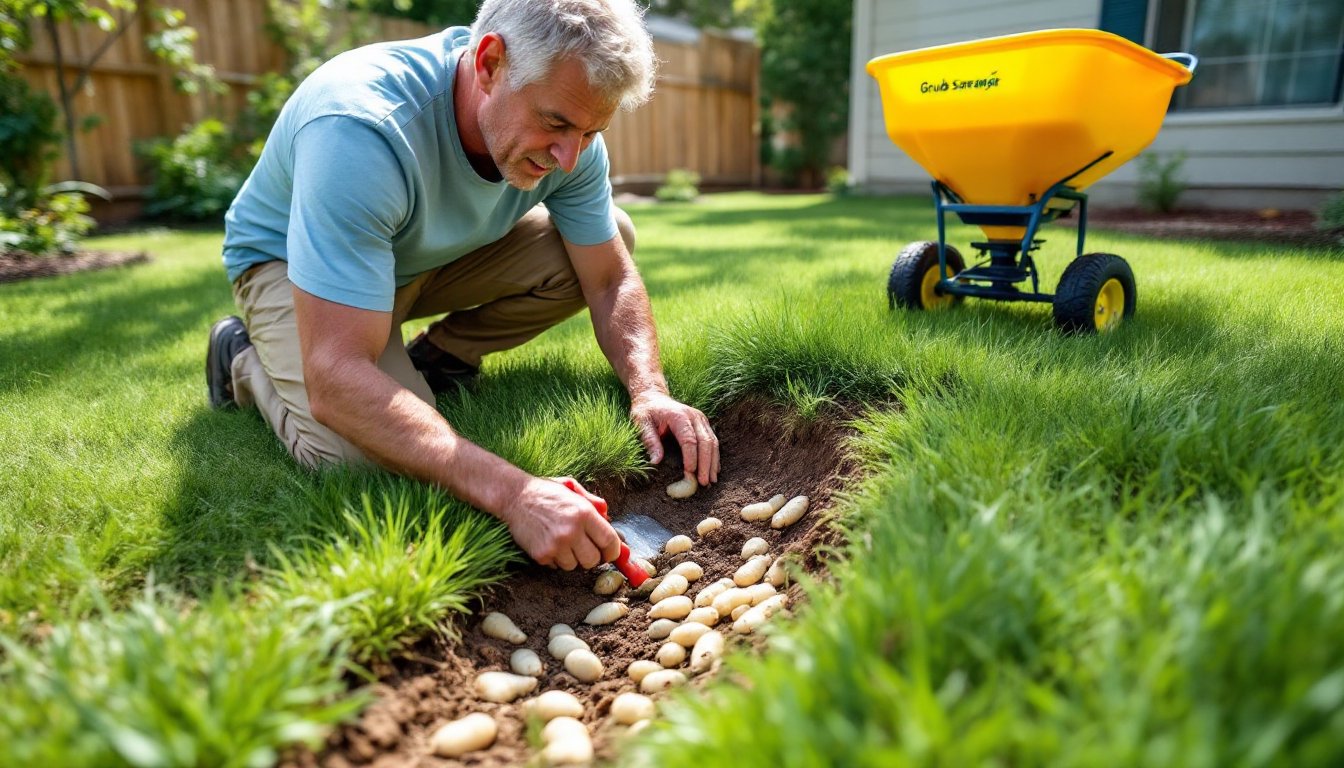
To confirm an infestation, cut a square foot of turf about three inches deep with a spade or soil knife and peel it back. Count the grubs you see. Five or fewer per square foot is generally tolerable: ten or more signals the need for immediate curative grub control measures.
Another red flag is increased animal activity. If you notice fresh digging by skunks, moles, or birds, especially in areas that were previously undisturbed, they’re likely hunting for grubs. These pests can sense grub populations underground and will damage turf to access them.
Beetles swarming around your yard in late spring or early summer also indicate potential trouble. Adult beetles lay eggs in turf, so heavy beetle activity often forecasts a grub problem weeks later.
When to Apply Grub Control Treatments
Timing is everything with lawn grub control. Apply the wrong product at the wrong time, and you’ll waste money without protecting your turf.
Preventive Grub Control Methods
Preventive treatments work by targeting newly hatched grubs before they grow large enough to damage roots. These products contain active ingredients like imidacloprid, thiamethoxam, or chlorantraniliprole, which remain active in the soil for weeks or even months.
When to put down grub control for prevention depends on your region and the dominant beetle species. In most of the U.S., apply preventive grub control in late spring to early summer, typically mid-May through July. This window ensures the product is active when beetles lay eggs and larvae hatch.
In Ohio and similar climates, when to apply grub control in Ohio follows the same late spring to early summer schedule. Japanese beetles are the primary culprit in the Midwest, and their larvae hatch in mid-to-late summer. Applying preventive treatments by late June gives the product time to establish in the root zone.
Water the lawn immediately after application, at least 0.5 inches of irrigation, to move the active ingredient into the soil where grubs feed. Without watering, the product stays on the surface and won’t reach the target zone.
Preventive treatments are ideal if you’ve had grub issues in previous years, if your neighbors are dealing with infestations, or if you’ve noticed heavy beetle activity in late spring.
Curative Grub Control Solutions
Curative grub control is designed to kill grubs that are actively feeding and damaging turf. These products typically contain trichlorfon or carbaryl, which work quickly but have a shorter residual period than preventive options.
When do you apply grub control curatively? Late summer to early fall, usually mid-August through September, is the optimal window. At this stage, grubs are young, feeding near the surface, and most vulnerable to treatment.
Curative products lose effectiveness as grubs mature and burrow deeper for winter. By late October, most grubs are too large and too deep to be reliably controlled. If you miss the fall window, you can attempt a spring application in April or early May when grubs move back toward the surface, though results are less consistent.
Apply curative treatments when soil temperatures are still warm, above 60°F, and grubs are actively feeding. Water thoroughly after application, using at least 0.5 to 1 inch of irrigation to carry the chemical into the root zone.
Homeowners dealing with an active infestation should also consider overseeding and fertilizing once grubs are controlled to help turf recover from root damage.
DIY vs. Professional Grub Control: Which Is Right for You
Most homeowners can handle grub control lawn treatments themselves, especially for preventive applications. Granular products are widely available at home centers and garden retailers, and they’re straightforward to apply with a broadcast or drop spreader.
DIY grub control works well if you have a small-to-moderate lawn (under 10,000 square feet), you’re comfortable operating a spreader, and you can follow label instructions precisely. Popular products include Scotts GrubEx (preventive) and Bayer 24 Hour Grub Killer (curative). Expect to pay $20 to $60 per application depending on lawn size and product choice.
Always wear gloves and avoid applying grub control treatments before heavy rain, which can wash the product into storm drains or waterways. Read the label for re-entry times, most products require keeping pets and kids off the lawn for 24 hours post-application.
If your lawn exceeds 10,000 square feet, or if you’ve tried DIY treatments without success, professional lawn care services may be a better option. Pros have access to commercial-grade products, calibrated equipment, and the experience to diagnose underlying issues like soil compaction or poor drainage that can worsen grub damage.
Professional grub control for lawn services typically cost $75 to $200 per treatment depending on lawn size and region. Many companies offer it as part of a seasonal lawn care package, which can include fertilization, aeration, and weed control.
Consider hiring a pro if you’re dealing with severe infestations (more than 15 grubs per square foot), if you have a large property, or if you’d rather not handle pesticides yourself. Licensed applicators are also required in some states for certain restricted-use products.
Whichever route you choose, consistency matters. Grub control isn’t a one-and-done fix. Annual preventive treatments are often necessary in areas with recurring beetle populations, and maintaining healthy turf through proper mowing, watering, and fertilization reduces vulnerability to future infestations and lawn stress.
Conclusion
Grub control for lawns doesn’t have to be complicated, but it does require good timing and the right approach. Whether you’re applying preventive treatments in late spring or hitting an active infestation with curative products in late summer, success comes down to understanding the pest’s lifecycle and acting when grubs are most vulnerable. With consistent care and the right products, homeowners can protect their turf and avoid the costly damage these hidden pests cause.