
Table of Contents
ToggleShopping for a dishwasher isn’t as straightforward as it used to be. Walk into any appliance store and you’ll face a wall of stainless steel boxes with cryptic spec sheets and price tags ranging from $400 to $2,000. The wrong choice means years of rewashing dishes by hand or cringing every time the unit roars to life during dinner. The right one? It disappears into your routine, handles everything from wine glasses to sheet pans, and doesn’t spike your utility bill. Whether you’re replacing a dead unit or upgrading from a decades-old model, understanding dishwasher types and what separates a solid workhorse from an overpriced headache will save you money and frustration down the line.
Key Takeaways
- When choosing a dishwasher, prioritize mid-range models ($600-$900) with stainless steel tubs, soil sensors, and sub-48 dB noise ratings for the best balance of cleaning performance and long-term value.
- Measure your cabinet opening before shopping and confirm real-world dimensions, as standard units are 24 inches wide but older homes may deviate, potentially requiring adapters or modifications.
- Look for models with at least 14 place settings if you cook regularly, and verify spray arm configuration—three-arm systems provide better water distribution across all racks than single or dual-arm designs.
- Energy Star-certified dishwashers use approximately 3.5 gallons per cycle compared to older units at 6 gallons, saving you $30-$50 annually on water and heating costs.
- Adjustable upper racks and third-rack designs dramatically improve flexibility for oversized cookware and daily cooking, making them worth the investment if you batch-cook or host frequently.
- Skip expensive add-ons like WiFi connectivity and extended warranties, but never compromise on quiet operation or rack adjustability, as these directly impact daily usability and satisfaction.
Size and Capacity Considerations
Standard dishwashers measure 24 inches wide, fitting into most base cabinet openings. If you’re working with a tight galley kitchen or a small apartment, 18-inch compact models exist but sacrifice capacity, typically holding 8 place settings versus 12-16 for full-size units. Portable dishwashers on wheels are another option for renters or kitchens without existing hookups, though they require manual connection to the sink faucet each cycle.
Place setting ratings give a rough idea of capacity, but they don’t account for real-world loading. A family that cooks daily will pile in mixing bowls, baking sheets, and cutting boards alongside plates. Look for models with at least 14 place settings if you routinely host or batch-cook meals. Smaller households might get by with 10-12, but undersizing forces you to run partial loads more often, negating efficiency gains.
Measure your cabinet opening before shopping. Standard rough openings are 24 inches wide by 24 inches deep by 34-35 inches tall, but older homes sometimes deviate. Bring a tape measure to the showroom and confirm the unit’s actual dimensions, not just the advertised size. Factor in an extra half-inch of clearance on the sides for leveling legs and hose connections. If you’re replacing an existing unit, check whether the water supply line is copper, braided stainless, or plastic, you may need an adapter.
Cleaning Performance and Cycle Options
When you’re learning how to choose a dishwasher, cleaning power matters more than cycle count. Budget models often tout eight or ten wash programs, but most users rotate between normal, heavy, and quick cycles. The key differentiator is whether the unit has a dedicated food grinder (hard-food disposer) versus a filtration system. Grinders pulverize debris and flush it down the drain: filters trap particles and require manual cleaning every few weeks. Grinders are quieter and lower-maintenance but cost more upfront.
Spray arm configuration directly impacts coverage. Entry-level dishwashers use a single lower arm: mid-range models add an upper arm: premium units include a third spray zone for the silverware basket or a dedicated bottle-wash jet. More arms mean better water distribution, especially on the top rack where tall glasses and mugs sit. If you frequently wash Tupperware or baby bottles, a third spray arm isn’t a luxury, it’s the difference between spotless and still-greasy.
Soil sensors adjust cycle time and water use based on how dirty the load is. They’re standard on most models above $600 but sometimes appear on sale units. Without a sensor, the dishwasher runs a fixed program regardless of whether you’re washing lightly used glasses or lasagna pans. Over time, sensor-equipped models use less water and energy per load. Some newer dishwasher technologies also include sanitize cycles certified to NSF/ANSI Standard 184, reaching 150°F to kill bacteria, helpful for cutting boards and baby items.
Energy and Water Efficiency Ratings
The Energy Star label is the baseline for efficiency, but dig into the numbers. A standard dishwasher uses 3-5 gallons per cycle: Energy Star-certified models cap it at around 3.5 gallons. Over a year (280 cycles, per Department of Energy estimates), that’s a savings of roughly 420 gallons if you’re replacing an older 6-gallon-per-cycle unit. At typical utility rates, expect $30-$50 in annual savings on water and heating costs.
kWh per year appears on the EnergyGuide label, usually ranging from 230 to 300 kWh for modern dishwashers. Models with internal water heaters use slightly more electricity but allow lower household water heater settings, which can offset the difference. If your home has a tankless or solar water heater, an internal booster becomes less critical.
Drying method affects energy use. Heated dry blows hot air over dishes, adding 15-20 minutes and extra kilowatt-hours. Condensation dry (air dry) uses residual heat from the rinse cycle, saving energy but sometimes leaving plastic items damp. Fan-assisted condensation splits the difference, using a small fan to circulate air without a heating element. If you’re willing to crack the door open after the cycle finishes, any drying method works, just avoid models that auto-lock the door until fully dry.
Noise Levels and Decibel Ratings
Decibel (dB) ratings tell you whether you can run the dishwasher during dinner without shouting over it. Anything below 45 dB is whisper-quiet, you’ll barely hear it from the next room. 46-50 dB is the sweet spot for most open-concept kitchens: audible but not intrusive. Above 52 dB, expect a noticeable hum that makes conversation difficult if the kitchen flows into the dining or living area.
Insulation and motor type drive noise levels. Cheaper units use exposed plastic tubs and direct-drive motors: premium models feature stainless steel tubs with sound-dampening blankets and inverter motors. Stainless interiors also dry dishes faster via better heat retention, so you’re getting a dual benefit. If your kitchen shares a wall with a bedroom or home office, budget for a sub-48 dB model, it’s worth the extra $100-$150.
Test noise ratings in context. A 44 dB dishwasher running at 10 p.m. in a quiet house feels louder than the same unit during daytime kitchen activity. Showroom demos are useless: rely on third-party reviews from sources like CNET that measure decibels in controlled environments. Some manufacturers game the rating by testing at lower spray pressures or shorter cycles, so cross-check user feedback on cycle noise versus advertised specs.
Interior Layout and Rack Flexibility
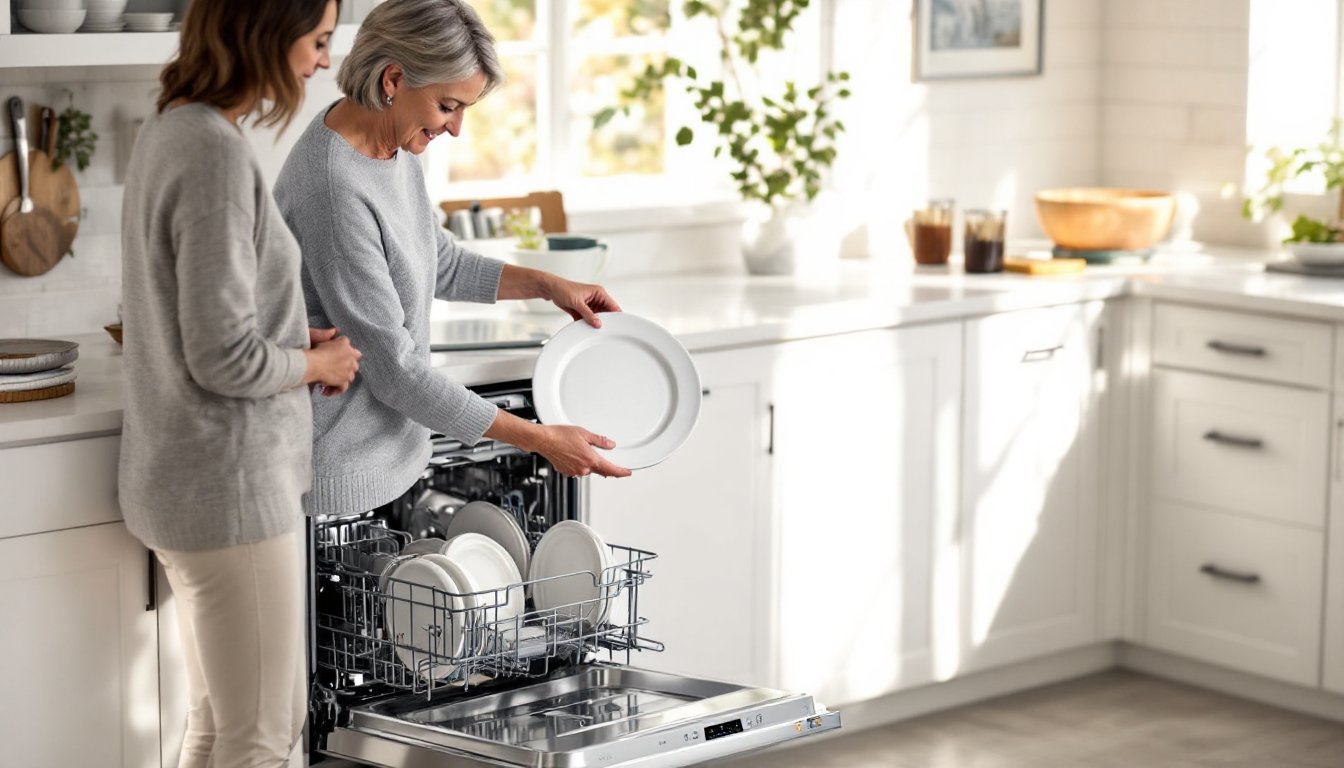
One overlooked factor in how to buy a dishwasher is rack design. Adjustable upper racks shift up or down by 2-3 inches, letting you fit oversized pots on the bottom or tall stemware on top. Some mid-range models now include split racks where only half the upper rack raises, giving you flexibility without losing capacity.
Third racks sit at the very top and hold flatware, kitchen tools, or small bowls. They free up space in the lower racks and improve cleaning by laying utensils flat instead of nesting them in a basket. If you cook from scratch daily, a third rack is a game-changer for whisks, spatulas, and measuring spoons. Skip it if you mostly use the dishwasher for plates and glasses.
Tine configuration matters for odd-shaped items. Fixed tines work fine for standard plates, but adjustable or fold-down tines accommodate mixing bowls, casserole dishes, and baking sheets. Look for at least one row of adjustable tines on the lower rack. Silverware baskets should have individual slots to prevent nesting, forks tangled together don’t get clean. If you wash a lot of baby bottles or travel mugs, confirm the upper rack has dedicated clips or a bottle-wash feature.
Budget and Long-Term Value
Entry-level dishwashers start around $400-$500 and handle basic cleaning but often run louder (50+ dB), use more water, and lack adjustable racks. Mid-range units ($600-$900) add soil sensors, quieter operation, stainless tubs, and better rack layouts, this is where most buyers find the best value. Premium models ($1,000-$2,000+) offer sub-44 dB operation, third racks, WiFi connectivity, and specialized cycles like bottle wash or crystal care.
Factor in installation costs if you’re not doing it yourself. Basic swap-outs run $100-$150 for a plumber or handyman to disconnect the old unit, hook up water and drain lines, and level the new one. If you’re adding a dishwasher to a kitchen that never had one, budget $300-$500 for running a dedicated 20-amp circuit (per NEC code), installing a shutoff valve, and potentially modifying cabinetry. Permits may be required for electrical work depending on your jurisdiction.
Warranty length signals manufacturer confidence. Most dishwashers include a one-year full warranty and 2-5 years on the tub and motor. Extended warranties rarely pay off, dishwashers either fail in the first year (covered) or run for a decade. Repair costs for a failed control board or pump average $200-$400, often approaching the price of a budget replacement. For insights on appliance longevity and performance, The Kitchn regularly reviews real-world durability.
Don’t overbuy features you won’t use. WiFi-enabled models let you start cycles remotely, but if you’re home when loading dishes, app control is redundant. Cycle time matters less than you think, most normal cycles run 2-3 hours regardless of price point. Focus budget on noise reduction, rack flexibility, and efficiency rather than gimmicks.
Conclusion
Choosing the right dishwasher comes down to matching specs to your actual kitchen habits. Measure your space, prioritize quiet operation if you have an open floor plan, and don’t skimp on rack adjustability if you cook often. The cheapest unit that fits your opening will cost you in water, noise, and frustration. The most expensive might waste money on features you’ll never touch. Aim for the middle tier with a stainless tub, soil sensor, and sub-48 dB rating, you’ll thank yourself every time you load it.