
Table of Contents
ToggleChoosing the right remodeling project can mean the difference between burning money and building equity. With material costs stabilizing and design trends favoring function over flash, 2026 is a solid year to upgrade strategically. This guide focuses on projects that deliver measurable return on investment (ROI) while improving everyday living, no Pinterest-speak, just practical advice on where to spend your budget for maximum impact. Whether planning a full-scale kitchen overhaul or targeted efficiency upgrades, homeowners need to understand what actually moves the needle on property value and comfort.
Key Takeaways
- Kitchen remodeling delivers the highest ROI at 70–85% for minor updates, making it the smartest first project for best home remodeling investments.
- Prioritize functional improvements like ventilation, insulation, and energy-efficient upgrades over cosmetic changes, as they provide compounding returns and federal tax credits up to $3,200 annually.
- Bathroom updates and finished basements/attics add measurable value at lower costs per square foot, returning 60–70% and 50–100% respectively when executed with proper moisture control and code compliance.
- Strategic material choices—such as quartz countertops, composite decking, and PEX plumbing—balance durability with affordability and require minimal maintenance.
- Timing your home remodeling project now is advantageous due to stabilized material costs, improved contractor availability, and shortened lead times compared to 2021–2023 supply chain disruptions.
- Outdoor improvements including entry doors, garage doors, and pressure washing offer quick ROI and significant curb appeal impact, often recouping 50–100% of investment.
Why Home Remodeling Is a Smart Investment Right Now
The housing market in 2026 favors sellers with updated homes. Buyers expect modern kitchens, energy-efficient systems, and turnkey condition, they’re not looking for fixer-uppers like they were a decade ago. According to recent home renovation cost guides, mid-range remodels are recouping 60–80% of their cost at resale, depending on the project and region.
Interest rates have settled, but home prices remain elevated in most markets. That makes remodeling a more attractive option than moving, especially if you’re locked into a low mortgage rate. Strategic upgrades let homeowners capture value without the transaction costs of selling and buying.
Timing matters. Material lead times have shortened, and contractor availability has improved since the bottlenecks of 2021–2023. Permitting processes are also more predictable in many jurisdictions. If you’ve been sitting on a project, now’s the window to act before the next supply crunch or rate shift.
Focus on projects that serve dual purposes: improving your daily life and appealing to future buyers. Cosmetic updates are fine, but functional improvements, better layout, added square footage, energy savings, deliver compounding returns.
Kitchen Remodeling: The Highest ROI Project
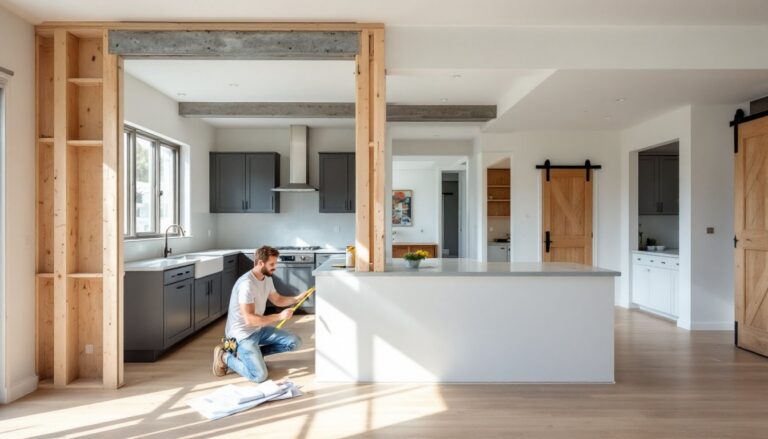
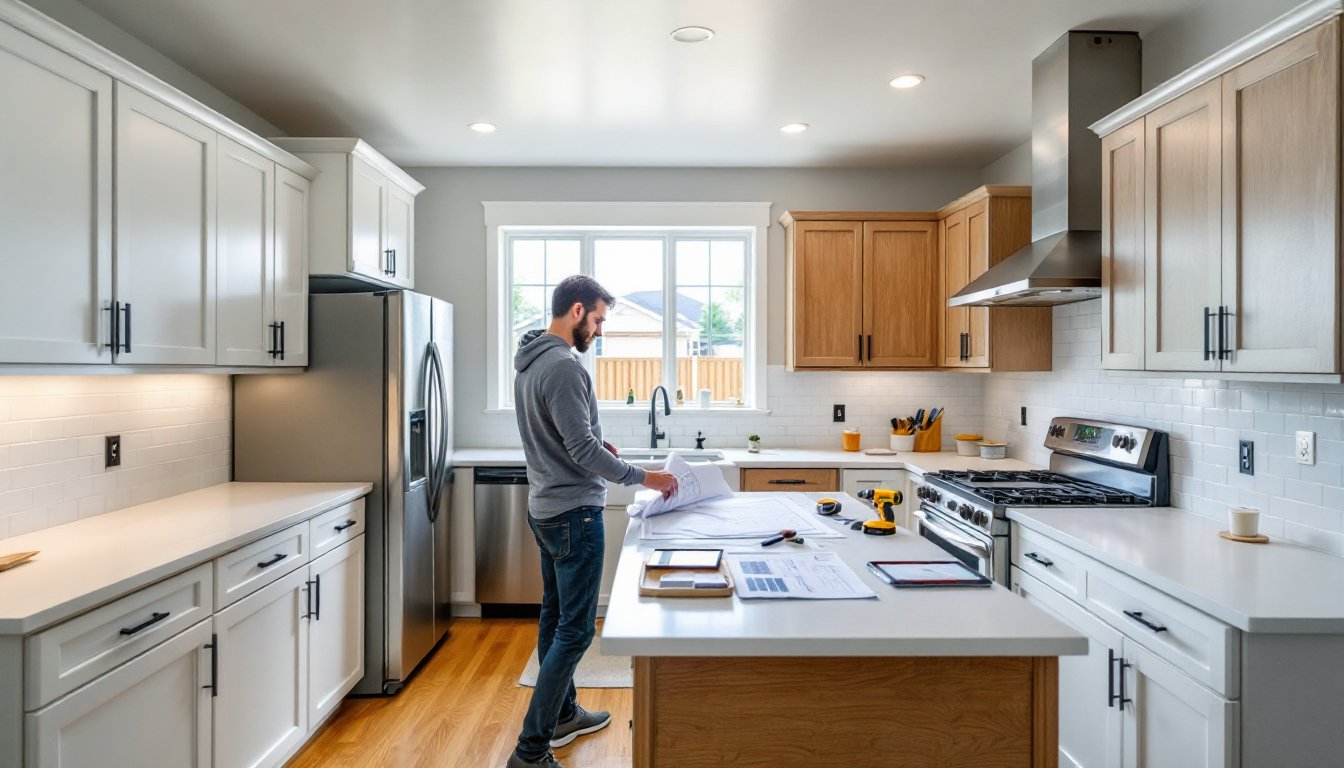
Kitchens consistently top the ROI charts because they’re the most-used room in the house. A minor kitchen remodel, new cabinet fronts, updated hardware, fresh countertops, and modern appliances, typically recoups 70–85% of its cost. Full gut jobs with layout changes cost more and recoup less, so measure carefully before tearing out walls.
Start with cabinets. Refacing or painting existing boxes costs a fraction of full replacement. If cabinets are structurally sound, swap doors, update hinges to soft-close, and add pulls in brushed nickel or matte black. Factory-primed MDF doors are paintable and affordable, around $15–$30 per door depending on size and style.
Countertop choices matter. Quartz dominates the market for good reason: it’s non-porous, low-maintenance, and available in dozens of colors. Expect to pay $60–$120 per square foot installed. Butcher block is a budget-friendly alternative for islands or small kitchens at $40–$70 per square foot, but it requires sealing and periodic maintenance.
Appliances should match the kitchen’s price point. A $10,000 range in a modest home won’t return its cost. Mid-tier stainless appliances from reliable brands (GE, Whirlpool, Bosch) hit the sweet spot for resale appeal without over-improving. If keeping existing appliances, consider a panel-ready refrigerator or installing cabinet panels to integrate them visually.
Lighting upgrades are non-negotiable. Replace that dated center fixture with recessed LED cans (4-inch IC-rated housings work in most ceilings) and add under-cabinet LED strips for task lighting. Dimmer switches cost $15–$25 each and make the space feel custom. For current kitchen remodel inspiration and product sourcebooks, look at curated galleries that emphasize functionality over trends.
Don’t skip the backsplash. Subway tile remains timeless, installs easily, and costs $8–$15 per square foot in materials. Use a notched trowel (1/4″ x 3/8″) for even mortar application and spacers for consistent grout lines.
Bathroom Updates That Transform Your Space
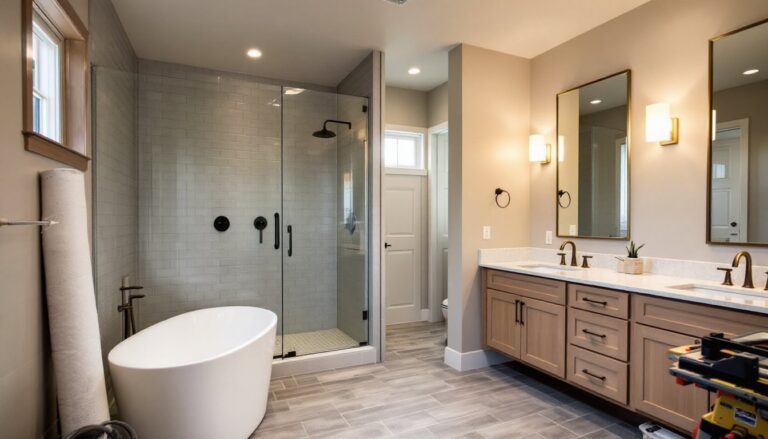
Bathrooms return 60–70% on remodels, and small changes make outsized impacts. Focus on fixtures, tile, and ventilation, three areas that signal quality to buyers and improve daily use.
Vanity replacement is the easiest win. Stock vanities at big-box stores run $200–$800 for a 36-inch unit with a cultured marble top. If plumbing locations stay put, installation is DIY-friendly with basic tools. Upgrade the faucet to a single-handle model with a ceramic disc cartridge for longevity. Brushed nickel and matte black finishes resist fingerprints better than polished chrome.
Tile the shower surround, not the pan. Acrylic or fiberglass shower bases are watertight, affordable ($150–$400), and easier to install than mud-set tile pans. Tile the walls with 3×6 subway or 12×24 porcelain planks. Use a waterproofing membrane (RedGard or Kerdi) over cement board: this is not the place to cut corners. Grout with epoxy or urethane-based products, they resist mildew and don’t require sealing.
Ventilation prevents mold and adds value. Install an exhaust fan rated for your bathroom’s square footage, typically 50–100 CFM for a standard 5×8 space. Models with humidity sensors (around $80–$150) run automatically and meet building codes in many areas. Vent to the exterior, not into the attic: improper venting causes structural damage.
Lighting layering matters. Combine recessed cans with sconces flanking the mirror. Sconces at eye level (60–65 inches off the floor) eliminate shadows for grooming tasks. Use LED bulbs rated 3000K for warm, flattering light.
If repiping, use PEX. It’s faster to install than copper, resists freeze damage, and costs about 30% less. Most jurisdictions approve PEX for residential use: check local codes.
Adding Functional Living Space: Basements and Attics
Finished basements and attics add livable square footage without expanding the footprint, critical in urban areas or small lots. Expect to pay $30–$75 per square foot for a basement finish and $50–$150 for an attic conversion, depending on existing conditions.
Basements require moisture control first. Test for water intrusion during heavy rain. Address drainage issues with exterior grading, gutter extensions, or a sump pump before finishing. Use rigid foam insulation (XPS or polyiso) against concrete walls, then frame with 2x4s on the flat to maximize space. Avoid fiberglass batts against concrete, they trap moisture.
Egress windows are legally required for bedrooms. An egress window must have a minimum opening of 5.7 square feet, with no dimension less than 20 inches, and a sill height no more than 44 inches above the floor (IRC R310.2). Cutting a foundation for egress requires a concrete saw and possibly a structural engineer’s stamp: this is often a job for pros.
For attics, check the floor joists. Most attics are framed with 2×6 or 2×8 joists on 24-inch centers, designed for storage loads (10–20 psf), not living space (30–40 psf). Sistering additional joists or adding engineered beams may be necessary, hire a structural engineer to assess before proceeding.
Insulation and ventilation go hand-in-hand. Install baffles at the eaves to maintain airflow from soffit to ridge vents, then blow in cellulose or fiberglass to R-38 or higher. Without proper ventilation, heat buildup degrades shingles and creates mold.
HVAC sizing matters. Adding 400–600 square feet of conditioned space may exceed your existing furnace or AC capacity. Consult an HVAC tech before finishing: undersized systems run constantly and fail early.
Outdoor Improvements That Enhance Curb Appeal
First impressions sell homes. Outdoor projects often recoup 50–100% of cost and make properties show better in listings.
Entry door replacement returns 60–90% on average. Steel doors with fiberglass panels resist dents and weather, cost $400–$1,200, and install in a few hours if the rough opening is standard (36 inches wide, 80 inches tall). Add a handleset with deadbolt rated Grade 1 or 2 by ANSI for security.
Garage doors matter more than you think. A new insulated steel door ($800–$2,000 installed) improves energy efficiency and adds visual weight to the facade. Choose a style that complements the home’s architecture, carriage-house designs suit traditional homes, while flush panels fit modern builds.
Deck resurfacing beats replacement. If the frame and joists are sound, replace decking boards with composite material like Trex or TimberTech. Composite resists rot, doesn’t splinter, and lasts 25+ years. Expect $8–$12 per linear foot for 5/4×6 boards. Use hidden fasteners for a clean look: they add about $1 per square foot but eliminate visible screws.
Landscaping delivers instant ROI. Mulch beds, edge walkways, and plant low-maintenance shrubs (boxwood, hydrangea, ornamental grasses). Avoid over-planting: buyers want manageable yards. Add solar path lights along walkways for safety and night appeal, they cost $3–$10 per fixture and require no wiring.
Pressure washing is the cheapest upgrade. Rent a 3,000 PSI gas-powered washer for $60–$100 per day and clean siding, driveways, and decks. Use a 25-degree nozzle for general cleaning and a detergent injector for tough stains. For detailed renovation tutorials and tool reviews, reference proven techniques from industry standards.
Energy-Efficient Upgrades Worth Making
Energy upgrades lower utility bills and qualify for federal tax credits, up to $3,200 per year through 2032 under the Inflation Reduction Act.
Air sealing beats insulation. Sealing leaks around windows, doors, outlets, and penetrations (pipes, vents, wires) can cut heating and cooling costs by 15–20%. Use caulk for gaps under 1/4 inch and expanding foam for larger openings. Don’t foam around electrical boxes without fire-rated products.
Window replacement is expensive but effective. Low-E vinyl windows with argon gas fill cost $450–$800 per window installed. They reduce heat transfer and block UV damage to flooring and furniture. If full replacement isn’t in the budget, add interior storm windows for $150–$250 each, they provide 70% of the efficiency gain at a fraction of the cost.
Heat pump water heaters save $300–$500 annually. They use ambient air to heat water and qualify for a 30% federal tax credit. Expect to pay $1,200–$2,500 installed. They require 1,000 cubic feet of surrounding space and work best in basements or garages.
LED bulbs and smart thermostats are no-brainers. Swapping incandescents for LEDs saves $75–$100 per year for a typical home. A programmable or smart thermostat (Ecobee, Honeywell) costs $100–$250 and pays for itself in 1–2 years by optimizing runtime.
Attic insulation upgrades deliver fast payback. Blow in cellulose or fiberglass to bring total R-value to R-49 or higher in cold climates, R-38 in moderate zones. DIY rental machines cost $50–$75 per day: materials run $1–$1.50 per square foot. Wear a respirator, goggles, gloves, and long sleeves, airborne fibers irritate skin and lungs.
Conclusion
The best remodeling projects balance cost, impact, and livability. Kitchens and bathrooms consistently return the most value, while energy-efficient upgrades and outdoor improvements offer measurable savings and curb appeal. Prioritize function over trend, prep thoroughly, and know when to call a pro. Strategic remodeling doesn’t just increase home value, it makes daily living better.