
Table of Contents
ToggleModern remodeling isn’t about chasing every trend that shows up on social media, it’s about making deliberate choices that improve how a home actually functions while keeping it looking current. In 2026, the emphasis has shifted toward spaces that adapt to real life: fewer walls, smarter material choices, and design that doesn’t sacrifice comfort for aesthetics. Whether someone’s tackling a full kitchen overhaul or rethinking a cramped living area, understanding what defines “modern” in practical terms makes the difference between a renovation that works and one that looks dated in five years.
Key Takeaways
- Modern home remodeling prioritizes function and deliberate design choices that create spaces adapted to real life, avoiding trends that look dated quickly.
- Open-concept living is evolving toward flexible, defined zones using partial walls, pocket doors, and level changes rather than removing all barriers entirely.
- Sustainable materials like reclaimed wood and recycled glass composites, paired with energy-efficient upgrades like spray foam insulation and Low-E windows, deliver both environmental benefits and long-term cost savings.
- Structural work, electrical upgrades, and HVAC rebalancing should never be skipped—modern remodeling requires planning for technology integration, proper permits, and professional expertise where code compliance matters.
- Successful modern home remodeling demands upfront planning with clear goals, a 15–20% budget contingency, accurate measurements, and realistic timelines that respect the sequential nature of construction phases.
What Defines Modern Home Remodeling?
Modern remodeling is characterized by clean lines, minimal ornamentation, and an emphasis on functionality over decoration. It’s not minimalism for the sake of being sparse, it’s about removing what doesn’t serve a purpose and highlighting what does.
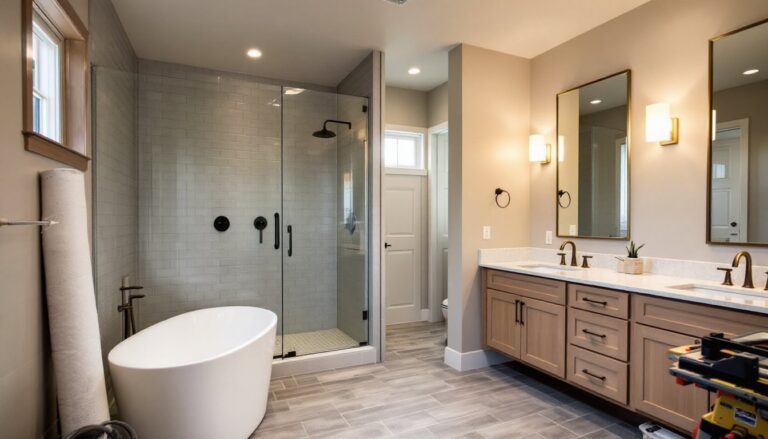
From a design standpoint, modern spaces favor neutral palettes with strategic pops of color, natural light maximization through larger windows or skylights, and materials that show their true character, think exposed steel beams, concrete countertops, or wide-plank hardwood without heavy staining. There’s no crown molding or ornate trim here: instead, reveals and shadow gaps create visual interest through geometry rather than applied decoration.
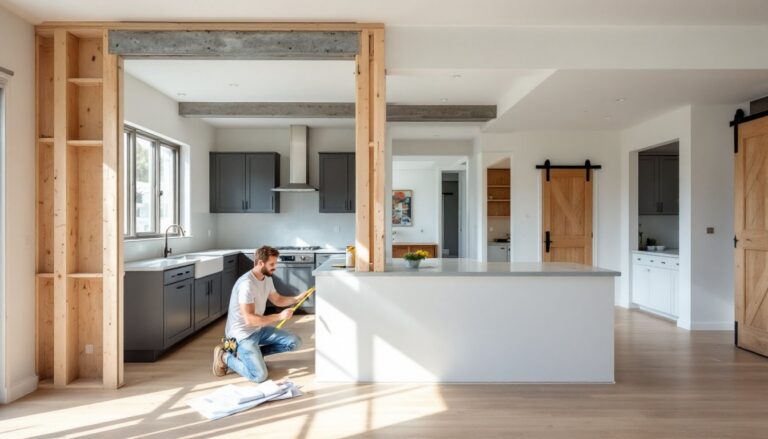
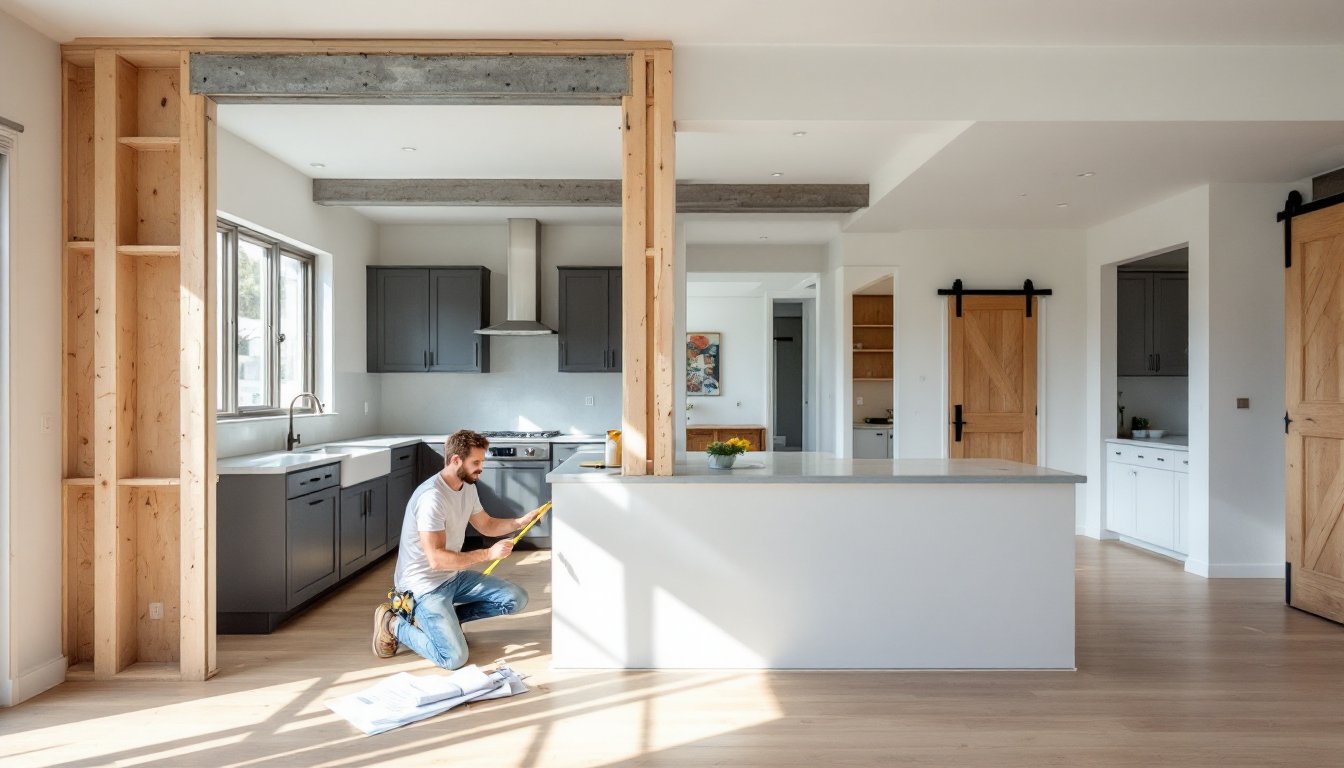
Structurally, modern remodels often involve removing non-load-bearing walls to create sight lines and improve flow. This requires understanding what’s holding up the house, always consult a structural engineer before touching any wall that runs perpendicular to floor joists or sits above a basement beam. Load-bearing walls can be removed, but they need a properly sized header (typically an LVL or steel beam) to carry the load, and that work usually requires a permit.
Modern design also embraces technology integration from the start. That means planning for outlets where they’ll actually be used, running conduit for future smart home upgrades, and designing lighting systems with dimming capability and multiple zones. Homeowners planning modern renovations often find that electrical work is one of the higher line items, but it’s also one of the most impactful for daily use.
Material choices lean toward durability and honest expression. Instead of laminate trying to look like wood, modern remodeling uses real wood, metal, glass, and stone in ways that showcase their inherent qualities. Surfaces are often matte or honed rather than glossy, which hides fingerprints and wear better in high-traffic areas.
Top Modern Remodeling Trends for 2026
Open-Concept Living and Flexible Spaces
The open floor plan isn’t new, but how it’s being executed has evolved. Rather than gutting everything into one cavernous room, the current approach uses partial walls, sliding partitions, and level changes to define zones without closing them off completely.
A half-wall between the kitchen and living room (often topped with a waterfall-edge counter) maintains some separation while keeping sight lines open. Pocket doors or barn-style sliders allow a home office to close off when needed but disappear when not in use. These solutions require advance framing, pocket door frames need to be installed during the rough framing stage, and they eat up about 5 inches of wall thickness.
Flexible spaces also mean designing rooms that can serve multiple purposes. A dining room that doubles as a workspace needs adequate electrical capacity (plan for at least two 20-amp circuits for computers and equipment) and good task lighting that’s separate from ambient fixtures. Built-in storage with closed cabinets keeps the space looking clean when transitioning from work to dinner mode.
Ceiling treatments are getting more attention as a fifth wall, exposed beams, tongue-and-groove planking, or even painted drywall in a contrasting color can define a zone without adding physical barriers. If the existing ceiling is drywall over trusses, adding beams is purely decorative unless they’re tied into the structure, so plan attachments carefully to hit blocking or solid framing.
When considering major room layouts, keep in mind that HVAC needs to be rebalanced when walls come down. A system designed to heat and cool separate rooms may struggle with one large space, consult an HVAC contractor before finalizing plans.
Sustainable Materials and Energy Efficiency
Sustainability has moved from niche to standard in modern remodeling, driven by both environmental concerns and long-term cost savings. The focus is on materials with low embodied energy, high durability, and improved building envelope performance.
Reclaimed wood is popular for flooring, accent walls, and ceiling treatments. Real reclaimed material (not distressed new lumber) comes from deconstructed barns, factories, or warehouses. It needs to be inspected for nails, kiln-dried to kill insects, and often remilled to consistent dimensions. Expect to pay $6–$12 per square foot installed, depending on species and finish.
For countertops, recycled glass composite and paper-based resin products (like Richlite) offer durability comparable to stone with a lower environmental impact. These materials typically run $50–$90 per square foot installed, similar to mid-range granite or quartz, but they’re non-porous and require no sealing.
Energy efficiency upgrades often deliver the best return on investment. Spray foam insulation in rim joists and attic spaces (closed-cell R-6 to R-7 per inch) creates an air seal that dramatically reduces heating and cooling costs. Upgrading to Low-E dual-pane windows (U-factor 0.30 or lower) cuts heat loss and virtually eliminates condensation issues in cold climates.
LED lighting is now the default, but specifying high CRI (Color Rendering Index) fixtures (90+ CRI) makes a noticeable difference in how colors appear, crucial in kitchens and bathrooms where finishes need to look accurate. Pair LEDs with dimmer switches rated for LED loads (not old incandescent dimmers, which cause flickering).
Energy Star appliances are table stakes now, but pay attention to actual usage specs, not just the rating. A dishwasher using 3.5 gallons per cycle versus 6 gallons makes a real difference over ten years. Induction cooktops are becoming standard in modern kitchens, they’re faster and more energy-efficient than gas or electric resistance, though they require compatible cookware (anything magnetic).
Projects involving professional contractors for solar panel installation, heat pump HVAC systems, or advanced insulation typically qualify for federal tax credits and local utility rebates, check current programs before finalizing the budget.
Planning Your Modern Remodeling Project
Good planning is what separates a successful remodel from an expensive lesson. Start by defining specific goals, “update the kitchen” is too vague, but “improve workflow between sink, stove, and fridge while adding 3 feet of counter space” gives clear direction.
Develop a realistic budget that includes a 15–20% contingency for unknowns. Opening walls often reveals outdated wiring, plumbing that’s not to code, or hidden water damage. That contingency isn’t pessimism, it’s planning.
Determine what requires permits in the local jurisdiction. Most structural changes, electrical work beyond replacing fixtures, plumbing relocation, and HVAC modifications need permits. Permit costs vary wildly ($200–$2,000+ depending on project scope), but the inspection process catches problems before they’re buried behind drywall. Skipping permits might save money short-term but complicates future home sales and insurance claims.
For design decisions, collect dimensional information before buying anything. Measure existing spaces, note ceiling heights, window sills, door swings, and any obstacles like ductwork or support posts. A 36-inch-wide range looks great online but won’t fit in a 34-inch opening, and widening that opening might mean relocating electrical or gas lines.
Material selection should happen early because lead times vary significantly. Custom cabinetry can take 8–12 weeks: some tile and stone need 4–6 weeks if not in stock. Appliances should be ordered once cabinet dimensions are confirmed but before installation starts, delivery delays can stall an entire project.
Decide what’s DIY and what needs professionals. Painting, demolition (non-structural), and installing trim or fixtures are within reach for most handy homeowners. Electrical beyond replacing outlets, anything involving gas lines, structural modifications, and finishing drywall to a smooth level-5 finish typically require skilled trades.
Create a realistic timeline that accounts for sequential work: framing before electrical, electrical before drywall, drywall before trim and paint. Trying to compress the schedule usually means paying premium rates for expedited work or living with compromised quality.
Don’t neglect the unglamorous infrastructure work. If the electrical panel is maxed out, upgrading to a 200-amp service before adding new circuits prevents future problems. If the main water line is old galvanized pipe, replacing it during a kitchen remodel (when walls are open anyway) makes sense. These aren’t exciting expenses, but they’re the foundation of a home that works properly.
Conclusion
Modern remodeling succeeds when form follows function and when design choices are backed by solid execution. It’s not about copying magazine spreads, it’s about understanding how spaces work, choosing materials that last, and building in the flexibility to adapt as needs change. Do the planning upfront, respect the structure, and don’t skip the boring stuff that makes everything else possible.