
Table of Contents
ToggleBathroom remodels consistently rank among the highest-ROI home improvements, and Spokane homeowners are no exception to this trend. Whether you’re dealing with outdated tile from the ’80s, fixing water damage behind a shower surround, or simply craving a spa-like retreat after a long day, a well-planned bathroom renovation can transform both your daily routine and your home’s resale value. But between local building codes, contractor availability, and the sheer number of design choices out there, it’s easy to feel overwhelmed before you even demo the first vanity. This guide walks through the practical side of remodeling a bathroom in Spokane, from setting a realistic budget to deciding when you can tackle the work yourself and when to call in a licensed pro.
Key Takeaways
- A Spokane bathroom remodel delivers strong ROI and can significantly reduce time on market, with costs ranging from $2,500 for cosmetic updates to $60,000+ for high-end renovations.
- DIY-friendly tasks like painting, vanity installation, and LVP flooring can save money, but plumbing relocation, electrical work, and waterproofing require licensed professionals to avoid code violations.
- Spokane’s climate and water efficiency priorities favor spa-like features such as heated floors, low-threshold showers, and updated insulation that improve both comfort and home value.
- Permits are required for plumbing, electrical, and structural changes; cosmetic updates typically don’t need approval, but verifying your local jurisdiction through Spokane County or City of Spokane is essential.
- Plan for 3–6 weeks for a mid-range bathroom remodel with a contractor, including 2–4 weeks for design and planning, and always add a 10–15% contingency budget for unexpected structural issues.
Why Spokane Homeowners Are Prioritizing Bathroom Remodels
Spokane’s housing stock includes a healthy mix of mid-century ranches, post-war bungalows, and newer builds, but many homes still carry original bathrooms with cramped layouts, single-pane windows, and fixtures that predate low-flow requirements. Water efficiency matters here, Spokane pulls from the Spokane Valley-Rathdrum Prairie Aquifer, and while it’s abundant, conservation remains a priority.
Beyond function, home values in Spokane have climbed steadily since 2020, and sellers are finding that updated bathrooms significantly shorten time on market. Buyers expect modern finishes, adequate lighting, and proper ventilation (mold and mildew are real concerns in our winter months). Even a modest refresh, new vanity, updated lighting, re-grouted tile, can shift a bathroom from “needs work” to “move-in ready.”
Finally, Spokane winters are cold. A drafty, poorly insulated bathroom isn’t just uncomfortable, it’s expensive. Remodels often include upgraded insulation, vapor barriers, and heated flooring, which improve comfort and cut heating costs.
Setting Your Bathroom Remodel Budget in Spokane
Before you pick out subway tile or debate freestanding tubs, nail down what you’re willing to spend. Spokane labor and material costs tend to run slightly below Seattle or Portland rates, but they’re not cheap, and surprise expenses are the norm, not the exception.
Average Costs and Price Ranges for Local Projects
Here’s what most Spokane projects cost as of early 2026 (material and labor combined):
- Cosmetic refresh (paint, fixtures, vanity swap, re-caulk): $2,500–$6,000
- Mid-range remodel (new tile, tub/shower replacement, upgraded vanity, new lighting): $12,000–$25,000
- High-end renovation (custom tile work, walk-in steam shower, double vanity, heated floors, structural changes): $30,000–$60,000+
These ranges assume a standard 5’×8′ bathroom. Larger primary suites or projects requiring plumbing relocation will push costs higher. Plan to add 10–15% contingency for unforeseen issues, rotted subfloor, outdated wiring, or hidden cast-iron drains that need replacing.
Material costs fluctuate. In 2026, tile and vanity prices have stabilized compared to the pandemic spike, but skilled trade labor remains in high demand. Booking a plumber or electrician often requires 3–6 weeks’ lead time, especially during spring and summer when home remodeling in Spokane, WA peaks. Factor that into your timeline and budget.
Popular Bathroom Design Trends in Spokane for 2026
Spokane homeowners tend toward practical, nature-inspired aesthetics rather than ultra-modern minimalism. Here’s what’s showing up in local projects:
- Warm, earthy palettes: Think sage greens, soft terracotta, warm grays, and natural wood tones. High-contrast black fixtures are losing ground to brushed brass, matte black-and-brass hybrids, and oil-rubbed bronze.
- Large-format tile: 12″×24″ or larger porcelain tile cuts down on grout lines, making cleaning easier and giving small bathrooms a more spacious feel. Rectified edges allow for tight grout joints (1/16″ or less).
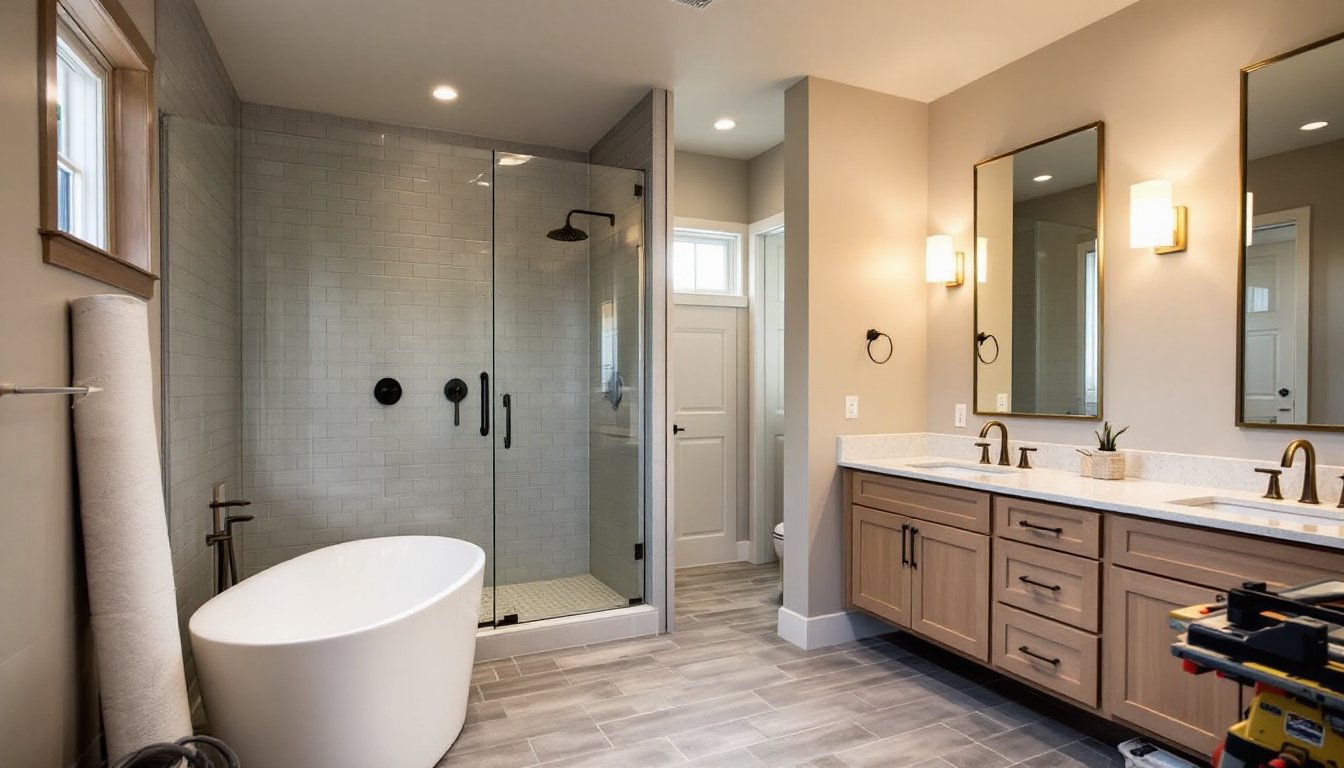
- Walk-in showers with low or zero thresholds: Curbless showers improve accessibility and create a seamless, spa-like look. They do require careful waterproofing and proper slope (minimum 1/4″ per foot toward the drain).
- Freestanding tubs: Popular in primary bath remodels, but they need adequate floor joist support. A 60-gallon cast-iron tub plus water and occupant can exceed 800 pounds. Verify your floor framing before installation, some older Spokane homes have 2×8 joists on 24″ centers that may need reinforcement.
- LED recessed lighting and separate task lighting: Overhead cans (4″ or 6″ housings) on dimmers, plus sconces flanking mirrors, eliminate shadows and improve functionality. Use IC-rated (insulation contact) housings if the bathroom ceiling is below an attic space.
- Luxury vinyl plank (LVP) and heated floors: Waterproof LVP is gaining traction as a tile alternative, especially for DIYers. Pair it with electric radiant heating mats (typical power: 12W per square foot) for warm feet on cold mornings.
If you’re planning a kitchen remodel in Spokane as well, coordinate finishes, matching cabinet styles, hardware, and flooring between rooms creates visual continuity and can yield bulk material discounts.
Choosing Between DIY and Professional Contractors
Not all bathroom work is created equal. Some tasks are straightforward weekend projects: others require licenses, specialized tools, and liability insurance.
Good DIY candidates:
- Removing old vanities, mirrors, and light fixtures (after shutting off power at the breaker)
- Painting walls and ceilings with mold-resistant primer and paint
- Installing new vanity tops, faucets, and cabinet hardware
- Replacing toilet flanges, wax rings, and supply lines
- Laying LVP flooring (after subfloor prep)
- Re-grouting and re-caulking tile
Call a licensed pro for:
- Moving or adding plumbing drains and supply lines (requires permit)
- Any electrical work beyond swapping like-for-like fixtures (Spokane follows NEC 2020: GFCI protection required within 6 feet of water sources)
- Structural changes, removing walls, relocating doors, adding windows
- Tile shower pan installation and waterproofing (improper slope or membrane errors lead to leaks and mold)
- Gas line work if you’re adding a tankless water heater
Contractors in Spokane typically charge $45–$75/hour for general carpentry, $75–$125/hour for licensed plumbers, and $65–$100/hour for electricians. Get at least three bids, verify licensing through the Washington State Department of Labor & Industries, and ask for references from recent bathroom projects.
If budget is tight, consider a hybrid approach: hire pros for plumbing rough-in and electrical, then handle demo, painting, and finish work yourself. Just be clear with your contractor about scope, most won’t warranty work if a DIYer does tile over their plumbing.
Navigating Permits and Local Building Codes
Spokane County and the City of Spokane have separate permitting authorities, so verify which jurisdiction covers your property. In general, you’ll need permits for:
- Plumbing: Moving drains, adding fixtures, replacing water heaters
- Electrical: Adding circuits, relocating outlets or switches, upgrading panels
- Structural: Removing or altering walls, adding windows or doors
Cosmetic work, paint, new vanity in the same footprint, replacing a toilet on the existing flange, typically doesn’t require permits. But if you’re unsure, call the building department. Unpermitted work can complicate future sales and leave you liable for code violations.
Key code requirements to keep in mind:
- GFCI protection on all 120V outlets within 6 feet of a water source (sinks, tubs, showers)
- Exhaust ventilation: Minimum 50 CFM for bathrooms under 100 sq ft, or an operable window
- Drain slope: Minimum 1/4″ per foot for all horizontal drains
- Fixture clearances: At least 15″ from toilet centerline to any wall or fixture: 21″ minimum clearance in front of the toilet
- Tempered glass: Required for any glazing within 18″ of doors or 60″ of tub/shower floors
Permit fees in Spokane run roughly $100–$300 depending on scope. Plan for a minimum 2–3 week review period before issuance, and schedule inspections (rough-in and final) through the process. Most contractors handle permitting, but if you’re doing it yourself, budget extra time and keep all documentation.
Timeline and Planning: What to Expect During Your Remodel
Realistic timelines prevent frustration. Here’s what to expect at each stage:
Design and planning (2–4 weeks):
- Measure the space (twice), sketch layouts, pick materials
- Get contractor bids, verify licenses and insurance
- Order long-lead items (custom vanities, special-order tile) early
Permitting (2–3 weeks):
- Submit plans and fees, wait for approval
- Schedule inspections in advance
Demo and rough-in (3–5 days):
- Tear out old fixtures, tile, flooring, and drywall as needed
- Inspect and repair subfloor, joists, and framing
- Rough in new plumbing and electrical: schedule inspection
Waterproofing and tile (5–10 days):
- Install cement board or foam backer (avoid green drywall in wet areas)
- Apply waterproof membrane (sheet or liquid: follow manufacturer specs)
- Lay tile, allow thinset and grout to cure fully (typically 48–72 hours)
Finish work (3–7 days):
- Install vanity, toilet, fixtures, mirrors, lighting
- Paint walls and trim
- Caulk all seams (use 100% silicone for wet areas)
- Final inspection
Total elapsed time: Expect 3–6 weeks for a mid-range remodel with a contractor, longer if custom work or material delays occur. DIY projects can stretch to 8–12 weeks if you’re working evenings and weekends.
Plan for your household to be without that bathroom during most of the project. If it’s your only full bath, arrange temporary access elsewhere or budget for a portable unit.
Reliable cost guides and contractor networks like Angi can help you compare project scope, get multiple bids, and track realistic timelines for Spokane-area work.