
Table of Contents
ToggleWalk into any big-box home improvement store, and you’ll spot Ortho Home Defense lining the pest control aisle, usually multiple formulas, each promising a barrier against crawling invaders. It’s one of the most recognizable names in DIY pest management, marketed as a spray-and-forget solution for spiders, roaches, ants, and other unwelcome guests. But does it actually deliver on those claims, or is it just another over-hyped product that leaves homeowners reaching for the phone to call an exterminator? This review digs into real-world performance, application specifics, safety concerns, and whether Ortho Home Defense earns its shelf space in your garage.
Key Takeaways
- Ortho Home Defense uses bifenthrin to create a residual barrier that effectively controls ants, spiders, centipedes, and silverfish for 8–12 weeks indoors, making it a cost-effective prevention solution.
- The Comfort Wand applicator reduces fatigue and provides consistent coverage, allowing homeowners to treat a full perimeter in 20–30 minutes with minimal effort.
- Ortho Home Defense reviews show mixed results against established roach infestations and flying insects like stink bugs, requiring integrated pest management or professional intervention for severe cases.
- Once dried within 30–60 minutes, the product is odorless, non-staining, and poses minimal risk to humans and pets, though precautions are needed during application and special care should be taken around cats and aquatic life.
- Outdoor effectiveness lasts only 4–6 weeks in wet seasons due to rain and UV exposure, requiring more frequent reapplication than indoor treatments.
- Multiple Ortho Home Defense formulas exist for different pests; the Indoor Insect Barrier or Indoor & Perimeter formula with the Comfort Wand offers the best value for DIY perimeter defense.
What Is Ortho Home Defense and How Does It Work?
Ortho Home Defense is a ready-to-use perimeter insecticide designed for indoor and outdoor application. The active ingredient in most formulas is bifenthrin, a synthetic pyrethroid that disrupts the nervous system of insects on contact or ingestion. It’s classified as a broad-spectrum insecticide, meaning it targets a wide range of crawling pests rather than one specific species.
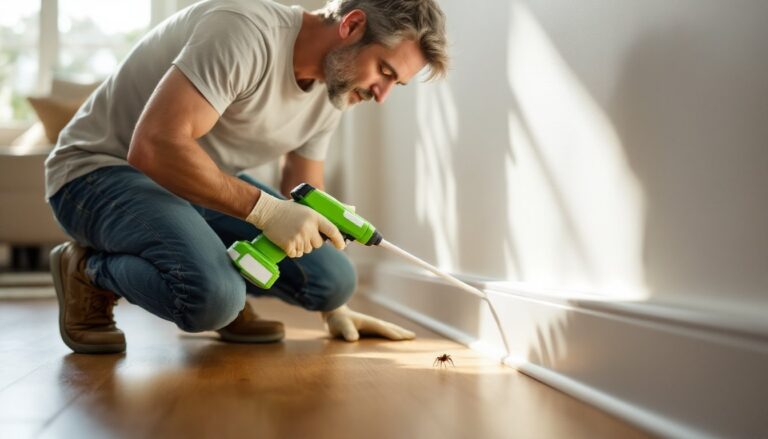
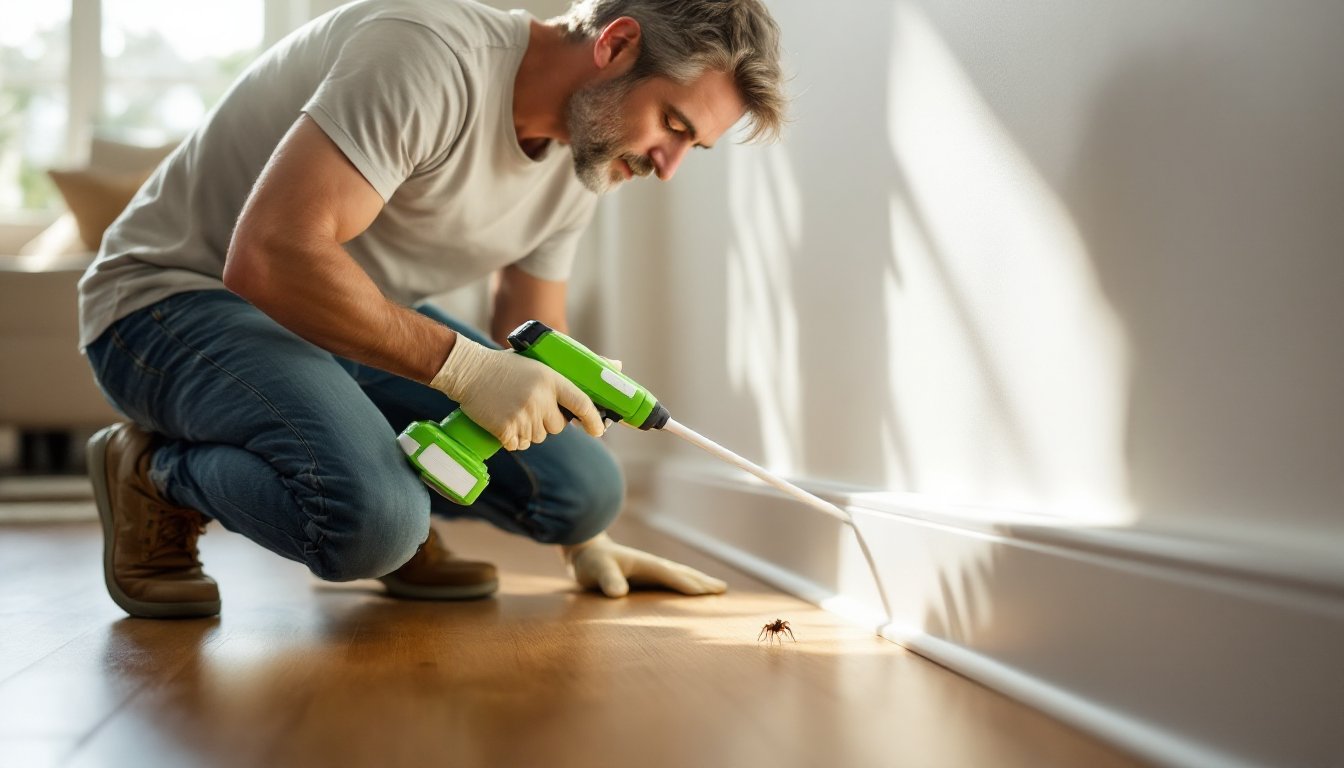
The product comes in a battery-powered Comfort Wand applicator or a traditional trigger spray. The Comfort Wand uses a 1.33-gallon jug with a battery-operated pump (one AA battery, included) that delivers a continuous, low-pressure spray. This design eliminates hand fatigue during extended applications and provides more consistent coverage than manual trigger bottles.
Once applied, bifenthrin creates a residual barrier that remains active for weeks. Insects crossing the treated surface pick up the chemical on their legs and bodies. The compound interferes with sodium channels in nerve cells, causing paralysis and death. The manufacturer claims up to 12 months of protection indoors and up to 3 months outdoors, though real-world conditions, UV exposure, rain, surface porosity, and pest pressure, heavily influence longevity.
Application involves spraying a 4-inch band along baseboards, door frames, window sills, and foundation perimeters. Outdoors, focus on entry points: cracks in siding, gaps around utility penetrations, and the foundation-to-soil junction. The spray dries clear and odorless within a few hours, making it less intrusive than older-generation pesticides.
Product Variations: Choosing the Right Ortho Home Defense Formula
Ortho offers several formulas under the Home Defense brand, each tailored to specific pest problems or application preferences. Understanding the differences prevents buying the wrong product for your situation.
Ortho Home Defense Max Indoor Insect Barrier is the flagship formula for year-round indoor use. It’s bifenthrin-based and safe for application on baseboards, behind appliances, and in storage areas once dry. The 1.33-gallon Comfort Wand version covers approximately 1,500 linear feet, enough for a full-perimeter treatment of a 1,500–2,000 sq. ft. home with material left over.
Ortho Home Defense Insect Killer for Indoor & Perimeter (often labeled with “Max” or “Ready-to-Use”) is the dual-purpose option. Same active ingredient, but formulated for both indoor baseboards and outdoor foundation barriers. This is the go-to for homeowners treating entry points from both sides.
Ortho Home Defense Bed Bug, Flea & Tick Killer uses a different chemistry, deltamethrin plus additional actives like prallethrin, for fast knockdown of biting pests. It’s a contact killer, not a long-lasting barrier, and requires direct spray on insects or harborage areas. Not ideal for perimeter defense: better for spot treatments.
Ortho BugClear Insect Killer for Lawns & Landscapes is an outdoor concentrate meant for turf and ornamental plants, not structural barriers. It uses bifenthrin but at different dilution rates and application methods (hose-end sprayer). Don’t confuse this with the perimeter spray, applying lawn products indoors is both ineffective and unsafe.
For most DIY pest management, the Indoor Insect Barrier or Indoor & Perimeter formula with the Comfort Wand is the best value and easiest to apply. If you’re dealing with active infestations rather than prevention, you’ll need a contact killer or professional intervention.
Real User Experience: What Homeowners Are Saying
Effectiveness Against Common Household Pests
User feedback on Ortho Home Defense is polarized, largely depending on pest type and infestation severity. Against ants and spiders, the product earns consistently high marks. Homeowners report noticeable reductions in spider activity within 48–72 hours of a perimeter treatment, with effectiveness lasting 8–12 weeks indoors in climate-controlled spaces. Ant trails typically stop within 24 hours after treating entry points, though some species, particularly carpenter ants with established colonies, require repeated applications or professional baiting.
Roaches present mixed results. German roaches (the small, indoor-breeding type) often require integrated pest management beyond a simple barrier spray. Users with light roach pressure or occasional invaders see good results: those dealing with established infestations report minimal impact. The bifenthrin barrier works best when roaches cross treated surfaces, but if they’re breeding inside wall voids or under appliances, a perimeter spray won’t eliminate the colony.
Centipedes, silverfish, and earwigs are effectively controlled by Ortho Home Defense, according to both user reviews and independent testing. These moisture-loving pests typically enter from basements or crawl spaces, making foundation and basement perimeter treatments particularly effective.
One common complaint: stink bugs and boxelder bugs seem less affected by bifenthrin barriers. These overwintering pests often enter through upper-story gaps and attic vents, areas less practical for barrier treatments. Some users report success with direct spray on clusters, but the product isn’t marketed or formulated for flying insect control.
Independent reviews, including comprehensive testing from sources like Today’s Homeowner, confirm that Ortho Home Defense performs well against crawling insects when applied correctly but isn’t a cure-all for every pest scenario.
Ease of Application and Coverage
The Comfort Wand receives near-universal praise for ergonomics and ease of use. The battery-powered pump delivers consistent flow without hand cramping, a significant advantage over trigger sprayers during whole-house treatments. One AA battery typically lasts through multiple applications before needing replacement.
Coverage estimates hold up in practice. A 1.33-gallon jug treating 1,500 linear feet translates to a 4-inch band along roughly 375 feet of wall when applied at the recommended thickness. For context, a 1,500 sq. ft. ranch with a rectangular footprint has about 200–250 linear feet of exterior foundation, leaving plenty for interior baseboards and door frames.
The spray pattern is fan-shaped rather than a pinpoint stream, making it faster to cover large areas but requiring slight technique adjustment near corners and tight spaces. Users recommend holding the wand at a 45-degree angle about 12 inches from the surface for best coverage without puddling or overspray.
Dry time averages 30–60 minutes on porous surfaces like drywall and painted wood, longer on sealed concrete or tile. The dried residue is invisible and doesn’t leave sticky or greasy films, a common issue with older pyrethroid formulas.
One practical frustration: the wand’s rigid tube makes treating under appliances or behind furniture awkward. A detachable extension wand (not included) would improve reach into low-clearance areas. Some DIYers solve this by transferring product to a handheld trigger sprayer for precision work, though this defeats the Comfort Wand’s main advantage.
Pros and Cons: Is Ortho Home Defense Worth the Investment?
Pros:
- Long residual protection. The 8–12 week indoor effectiveness claim is realistic for climate-controlled environments with low UV exposure. Outdoor treatments last 6–8 weeks in most conditions, longer under eaves or covered areas.
- Broad-spectrum control. One product handles ants, spiders, roaches, centipedes, silverfish, and more, simplifying pest management for homeowners without multiple specialized sprays.
- User-friendly application. The Comfort Wand genuinely reduces fatigue and speeds up whole-house treatments. DIYers can complete a full perimeter in 20–30 minutes.
- Odorless and non-staining. Unlike older pyrethroids or oil-based pesticides, Ortho Home Defense dries clear without lingering smells or discoloration on baseboards and walls.
- Cost-effective for prevention. At $15–$20 per 1.33-gallon jug (prices vary by retailer and region), quarterly perimeter treatments cost far less than monthly professional service contracts.
Cons:
- Not effective against all pests. Flying insects, bed bugs, and heavily established roach or ant colonies require different approaches. The product’s marketing sometimes oversells its capability as an all-in-one solution.
- Outdoor longevity depends on weather. Rain, irrigation, and direct sunlight degrade bifenthrin faster than indoor applications. Expect to reapply every 4–6 weeks during wet seasons.
- Limited penetration into cracks and voids. The fan spray pattern covers surfaces well but doesn’t inject deeply into wall voids or expansion joints where some pests hide. Crack-and-crevice treatments may still require a separate aerosol or dust formulation.
- Battery dependency. While the Comfort Wand’s battery lasts through multiple uses, it will eventually fail. Replacement AA batteries add minor ongoing cost, and the wand becomes useless if the pump mechanism breaks (though this is uncommon).
- Environmental and non-target concerns. Bifenthrin is highly toxic to aquatic organisms and bees. Overspray near ponds, streams, or flowering plants can harm non-target species. Always follow label restrictions and avoid treating near water or blooming vegetation.
Comparative testing from resources like CNET’s bug spray roundup places Ortho Home Defense among the top performers for DIY perimeter control, though professional-grade products with higher bifenthrin concentrations may outperform it in severe infestations.
Safety Considerations for Families and Pets
Bifenthrin is classified as a Category II pesticide (moderately toxic) by the EPA. It poses low risk to humans and pets once dried, but wet product and concentrate require caution.
During application:
- Wear nitrile gloves and safety glasses. Skin contact with wet product can cause irritation: eye contact requires immediate flushing and medical attention.
- Keep children and pets out of treated areas until surfaces are completely dry, typically 30–60 minutes. Ventilate treated rooms by opening windows if applying indoors.
- Avoid spraying on surfaces where food is prepared or where children and pets have direct, prolonged contact (e.g., play mats, pet bedding).
Post-application:
- Once dry, bifenthrin binds tightly to surfaces and poses minimal exposure risk through casual contact. Studies show negligible transfer to skin from treated baseboards or floors.
- Cats are more sensitive to pyrethroids than dogs due to slower metabolic clearance. While dried Ortho Home Defense is considered safe, avoid treating areas where cats frequently groom themselves (e.g., windowsills they nap on). If a cat shows signs of pyrethroid toxicity, tremors, excessive salivation, or loss of coordination, seek veterinary care immediately.
- Aquatic pets (fish, amphibians) are highly vulnerable. Cover aquariums during indoor application and ensure no overspray enters tanks. Bifenthrin is lethal to fish at extremely low concentrations.
Storage and disposal:
- Store the Comfort Wand jug in a cool, dry location away from children, pets, and food. Garages and utility rooms work well: avoid attics or sheds with temperature extremes.
- Empty jugs should be triple-rinsed and recycled where accepted. Never pour leftover product down drains or into storm sewers, bifenthrin is acutely toxic to aquatic ecosystems.
Alternatives for sensitive households:
If pets or children have heightened sensitivities, consider diatomaceous earth (food-grade) as a mechanical insecticide for low-traffic areas like baseboards and crawl spaces. It’s non-toxic but far slower-acting and messier than bifenthrin sprays. For professional-grade results with lower mammalian toxicity, indoxacarb baits (Advion, Arilon) target specific pests without broad-spectrum residues, though they require more precise application knowledge.
Always read the full product label before use. Pesticide regulations and safety data evolve: confirm current EPA registration and any state-specific restrictions. If you’re uncertain about application near sensitive areas or individuals, consult a licensed pest control operator.